The INA’s proud association with the Irish Monument, Waverley
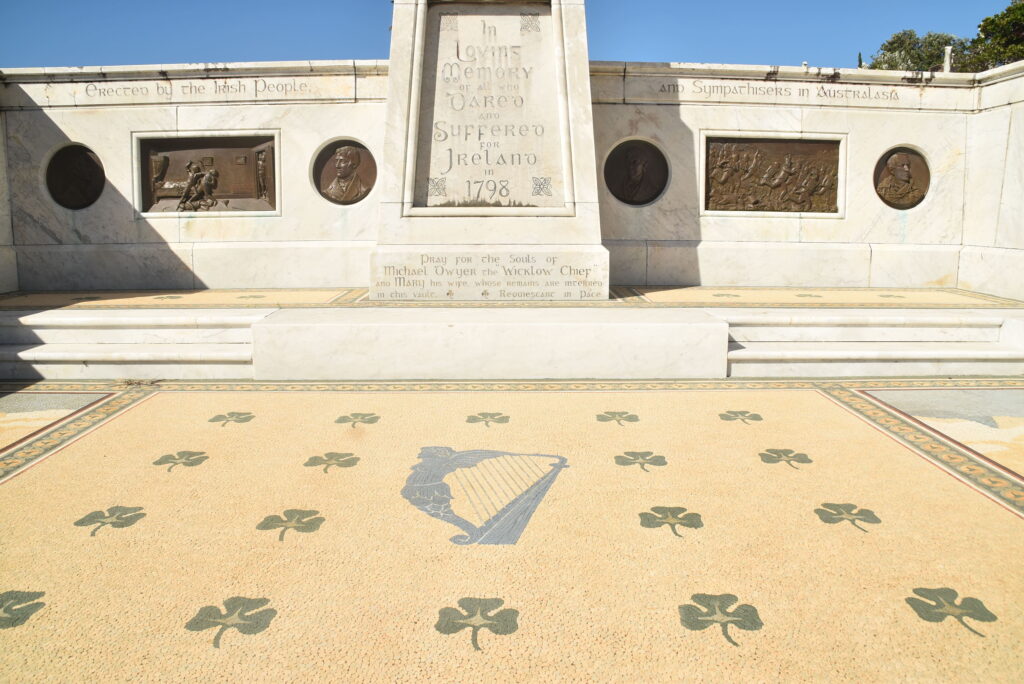
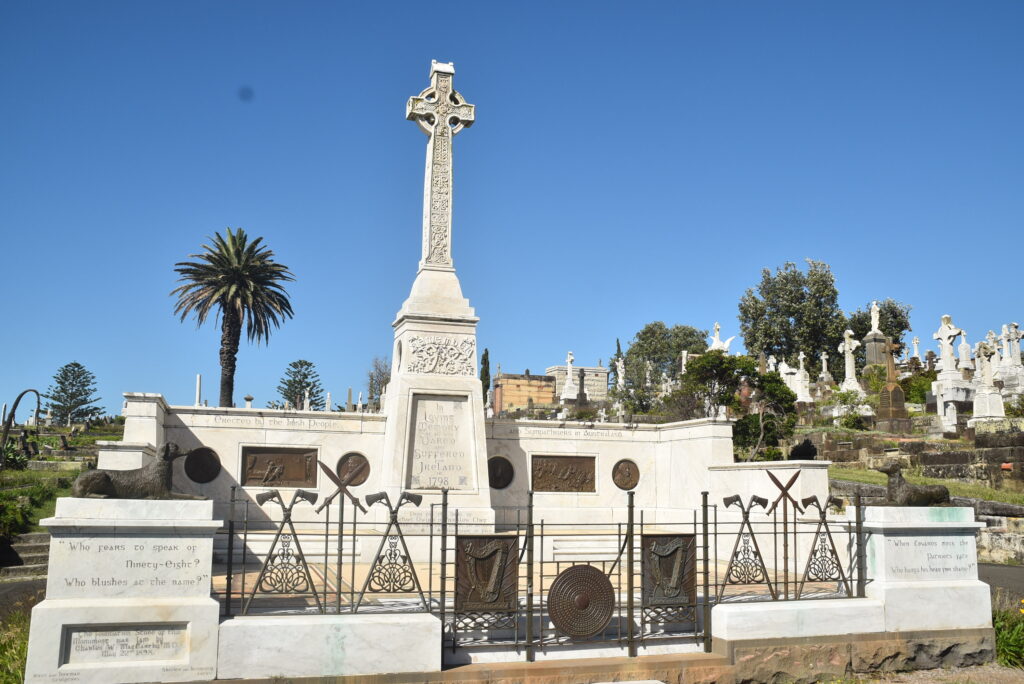
The Irish Monument in Waverley Cemetery pays homage to the patriots and martyrs of the Uprisings of 1798 and 1916, and of the 1981 Hunger Strikes, and all who have dared and fought for Irish Unity during centuries of rebellion and defiance.
The Monument marks the final resting place of Patriot Michael ‘the Wicklow Chief’ Dwyer and his wife Mary, a leader of the 1798 Rising in Wexford who continued the fight in his native Wicklow hills for five years after the Rising had been suppressed.
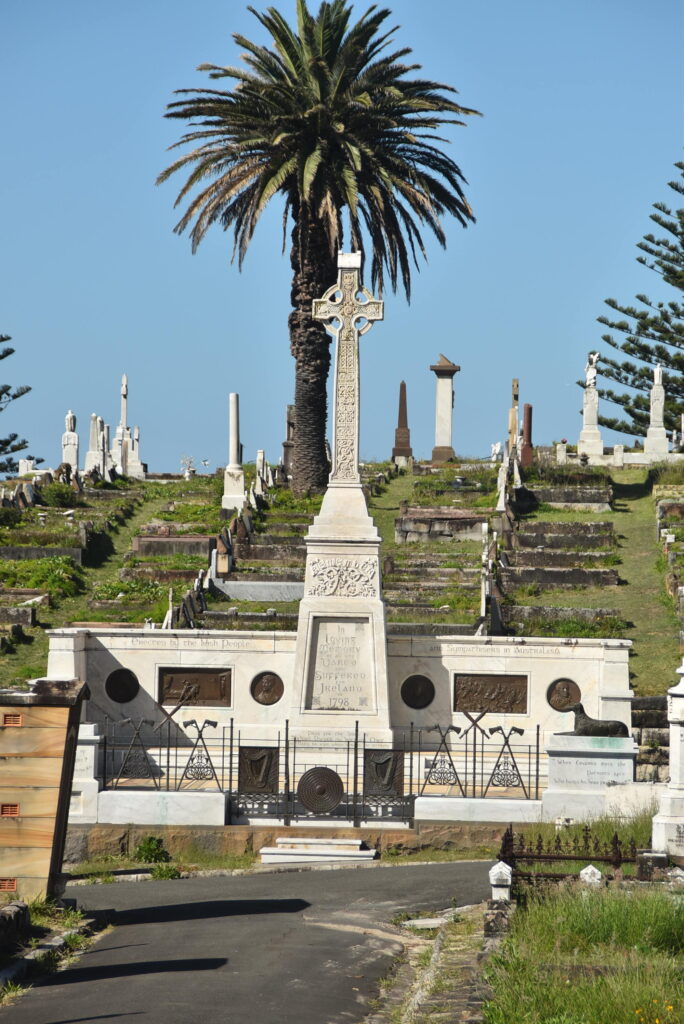
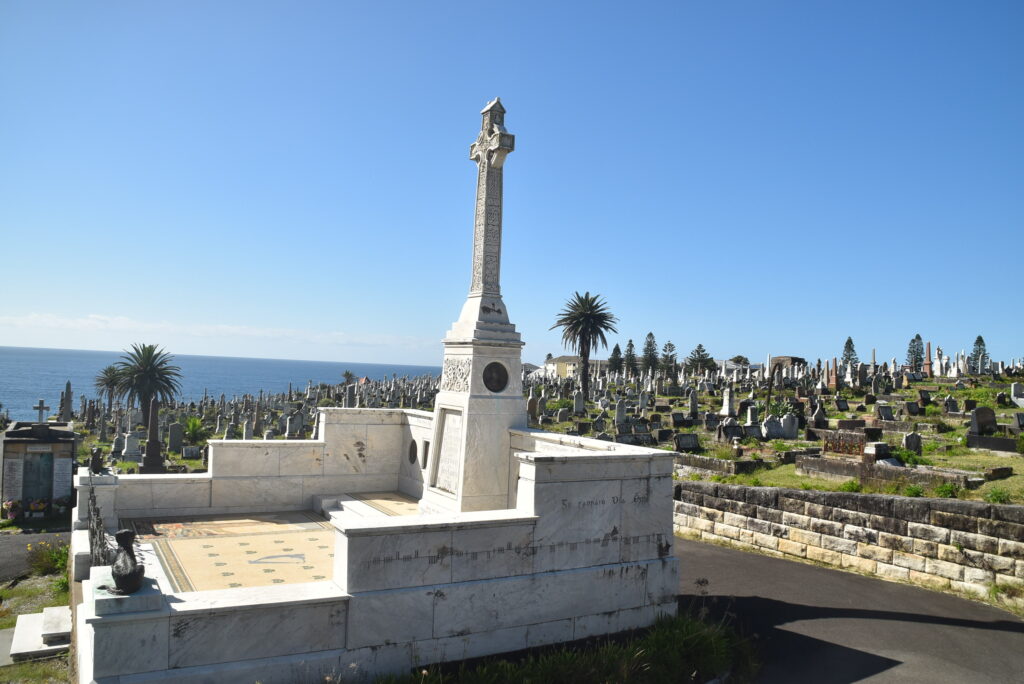
The vast edifice measures 9m wide and 7m deep and is crowned by a 9m-tall Celtic cross, with intricate Celtic intertwining. The Monument is made of made of Carrera marble, bronze and mosaic. It is widely regarded as the world’s largest and most elaborate monument to the 1798 Rising.
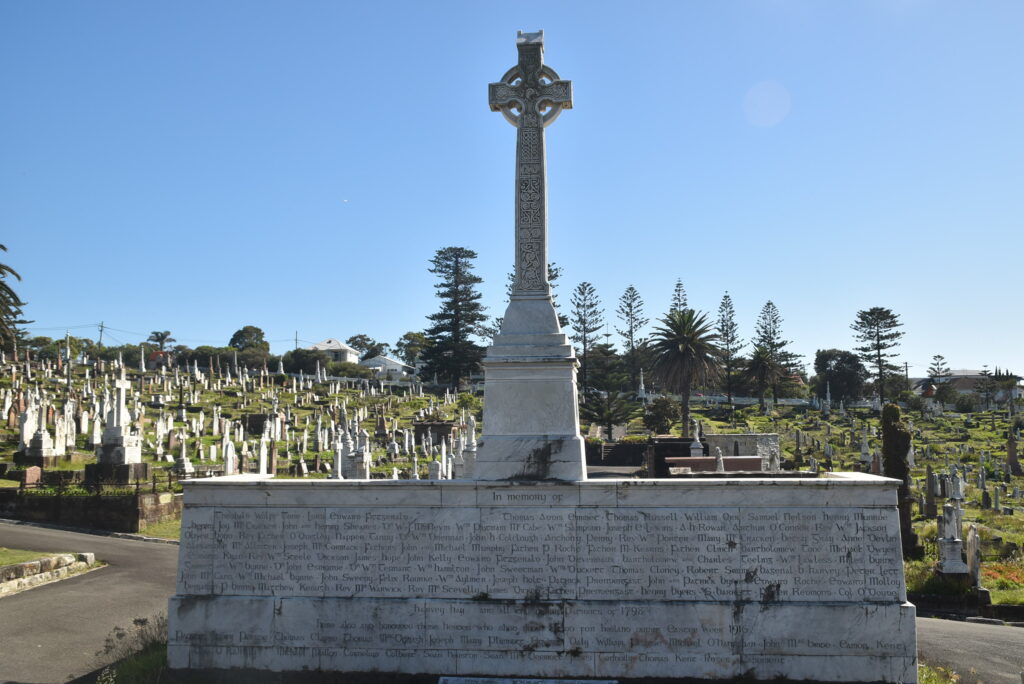
The Monument features the names of Irish patriots who took part in the 1798 and 1916 Uprisings, including those who were executed. In 1994, the Irish National Association added the names of ten Republican hunger-strikers who died in the Maze Prison, Belfast, in 1981.
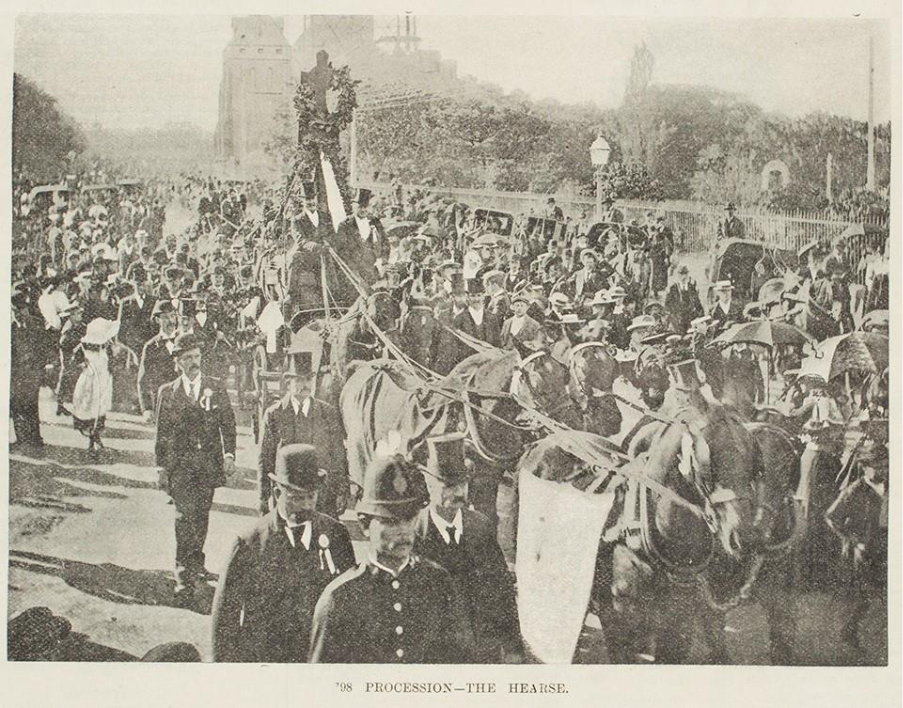
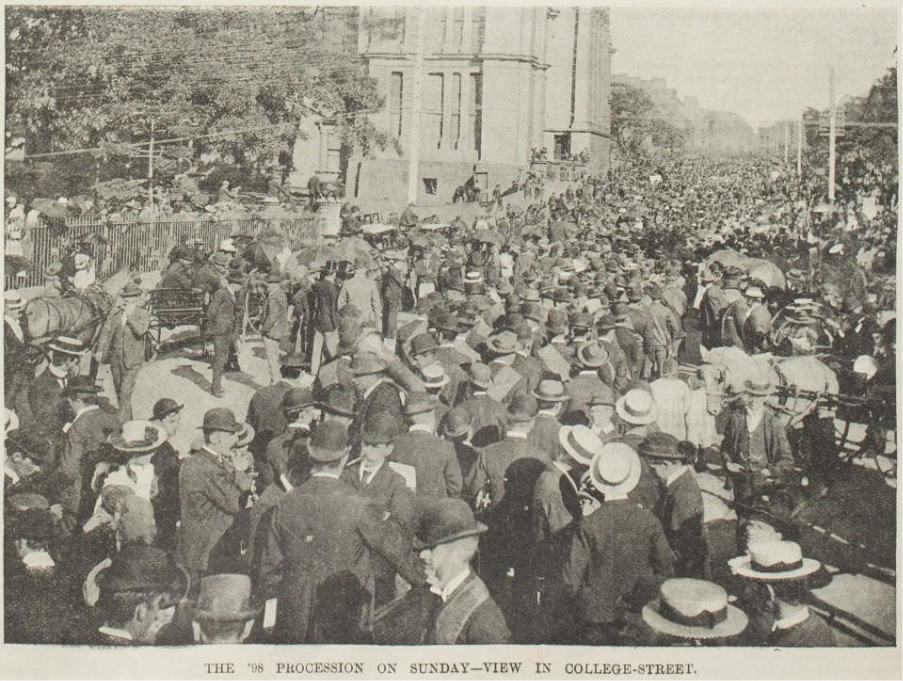
The plan to build the Monument was conceived in the lead-up to the centenary of the 1798 Rising and proceeded under the leadership of Dr Charles MacCarthy. After purchasing the plot at Waverley, MacCarthy and his team arranged for the coffins to be exhumed and transferred to St Mary’s Cathedral, before being moved to the cemetery in a solemn procession (see images below). Newspapers at the time estimated the crowds who lined the streets at 200,000 people—one of the largest gatherings to attend a public event in Australia up to that date.
The Monument was then built over the graves and officially opened on Easter Sunday, 1900. Carved on the base of the cross are the words:
‘In loving memory of all who dared and suffered in Ireland in 1798.’
The rear wall, which stands 1.8m tall, carries 76 names of men and women, priests and ministers, who took part in the 1798 Rising. Below them are the names, added in 1947, of those who were executed after the 1916 Rising.
The monument features bronze sculptures and plaques designed and made by Dr MacCarthy, including two bronze wolfhounds and bronze plaques which feature significant leaders of the 1798 Rising. Those on the left represent Theobold Wolfe Tone and Lord Edward Fitzgerald. Those at the right are of Michael Dwyer, the battle of Oulart Hill and Robert Emmet. High on the side of the cross on the left is a plaque with a bas relief of Henry Joy McCracken and on the right, a bas relief of Father John Murphy.
The INA has invested significantly in restoring and preserving the monument in recent decades. It hosts a commemorative event at the Monument every Easter Sunday afternoon, which usually features a keynote speaker and a reading of the 1916 Proclamation in Irish and then in English.
More information about the Irish Monument is available in the book, To foster an Irish spirit: The Irish National Association of Australasia 1915-2015 by Richard Reid, Jeff Kildea, Perry McIntyre. Anchor Books Australia, 2020.
And also in this article by Michael O’Sullivan.